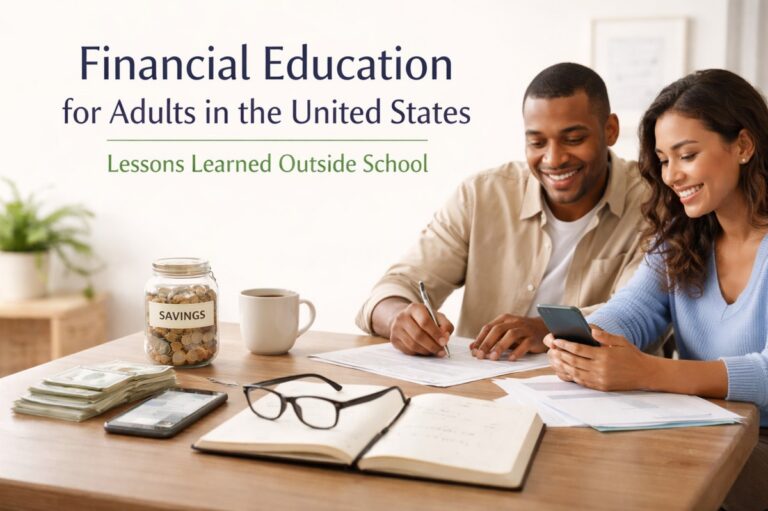
For many adults in the United States, learning how to manage money does not happen in a classroom. Instead, financial knowledge is often built through experience, trial and error, and necessity. From paying the first rent bill to navigating credit cards, loans, and investments, adults are frequently forced to learn practical skills on the go.
This informal path to financial literacy can be challenging, but it also creates valuable lessons that are deeply connected to everyday life and personal goals, helping adults develop resilience, confidence, and a more realistic understanding of how money decisions affect their long-term stability and quality of life.
Learning through daily responsibilities
One of the most powerful teachers of money management is responsibility itself. Managing household expenses, covering healthcare costs, and planning for unexpected events push adults to develop budgeting habits quickly. Many people begin to understand the importance of tracking expenses only after facing overdraft fees or credit card debt.
These moments, although stressful, often lead to more disciplined financial behavior. Over time, adults learn to prioritize needs over wants, compare prices, and make more thoughtful spending decisions based on real consequences rather than theory.
Work, credit, and long-term choices
Professional life also plays a major role in shaping financial understanding. Salary negotiations, employee benefits, retirement plans, and taxes introduce concepts that are rarely explained in school. Credit history, in particular, becomes a crucial lesson.
Adults discover how payment habits affect loan approvals, interest rates, and even housing opportunities. This knowledge often comes from experience—both positive and negative—and encourages a more strategic approach to borrowing, saving, and planning for the future.
Community resources and self-education paths
Beyond personal experience, many adults turn to alternative resources to improve their financial skills. Online platforms, podcasts, local workshops, and community organizations offer practical guidance tailored to real-world situations. These tools allow individuals to learn at their own pace and focus on topics that matter most to them, such as investing, debt reduction, or home ownership.
In the absence of formal education, curiosity and self-motivation become essential. By actively seeking information and learning from others’ experiences, adults across the country build financial confidence and resilience, proving that meaningful education can happen well beyond school walls.
👉 Also read: Practical strategies to cut food expenses in the U.S. without sacrificing quality.