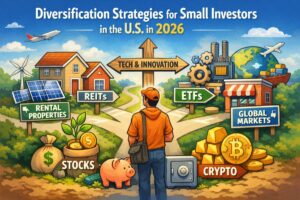
Over the past decade, the concept of investing has undergone a profound transformation in the United States. Traditional portfolios built solely on financial returns are now being reimagined through the lens of social impact. This shift is being driven not only by a growing awareness of global challenges but also by the realization that purpose and profit are not mutually exclusive.
Social impact investing, often referred to as ESG (Environmental, Social, and Governance) or mission-based investing, has evolved from a niche approach into a mainstream financial movement. It’s no longer just philanthropic individuals or activist funds pursuing these goals; today, large asset managers, retirement funds, and even everyday retail investors are getting involved.
Rethinking financial goals: profit meets purpose

One of the most notable changes in the U.S. investment landscape is the redefinition of what success looks like in a portfolio. For decades, maximizing returns was the primary objective for most investors. However, a new generation of Americans is now asking deeper questions: How does this investment affect the environment?
Younger investors, particularly millennials and Gen Z, are leading this transition. Surveys consistently show that these groups are more likely to invest in companies that reflect their ethical beliefs and social priorities. For them, investments are not just financial tools but expressions of personal identity and responsibility.
The expansion of ESG metrics and standards
As social impact investing grows, so too does the need for robust and standardized metrics to assess impact. In the early days of ESG investing, one of the biggest challenges was the lack of consistent data and benchmarks. Companies often self-reported their environmental or social contributions, leading to concerns about greenwashing or superficial commitments.
Today, a wide range of ESG rating agencies and data providers have emerged to evaluate companies across various non-financial dimensions. These include carbon emissions, gender diversity on boards, supply chain ethics, and community engagement. As a result, investors have access to clearer indicators that help them determine whether a company is truly aligned with impact values or simply using ESG as a marketing tool.
Technology and accessibility are democratizing impact investing
A key driver behind the rise of social impact investing is the rapid advancement of financial technology. In the past, aligning investments with personal values often required working with specialized advisors or investing in limited mutual funds. Today, fintech platforms have broken down those barriers, allowing virtually anyone with a smartphone or computer to create a custom ESG portfolio with just a few clicks.
Apps like Betterment, Ellevest, and Wealthsimple offer socially responsible investment options tailored to individual preferences. Users can choose to emphasize clean energy, racial equity, gender diversity, or other causes close to their hearts.
This level of customization is attracting a more diverse group of investors who may have previously felt excluded from traditional financial institutions. Now, Americans of all income levels can take part in shaping a more equitable economy through their financial choices.
In addition, crowdfunding and micro-investment platforms have expanded the scope of participation. Startups tackling social issues—such as affordable housing, sustainable agriculture, or access to education—can now raise capital from a broad pool of investors.
This trend not only brings capital to underserved sectors but also strengthens community engagement, allowing individuals to support the change they want to see directly. Technology, therefore, is not just facilitating access but actively transforming the impact investing ecosystem.
The role of community and local impact initiatives
While global challenges like climate change often dominate the headlines, many American investors are also turning their attention closer to home. There is a growing recognition that positive change can start at the local level, and impact investing is being used to uplift communities in tangible ways.
Community development financial institutions (CDFIs) have gained prominence as vehicles for such localized impact. These nonprofit lenders specialize in providing credit to underserved areas that traditional banks often neglect. By investing in CDFIs, Americans can support economic resilience in neighborhoods facing disinvestment, creating jobs, improving infrastructure, and fostering inclusive growth.
Challenges and criticisms in the pursuit of impact
Despite the optimism surrounding social impact investing, it’s important to acknowledge that the space is not without challenges. One recurring concern is the issue of measurement. While progress has been made in standardizing ESG metrics, there is still no universal framework that fully captures the nuances of impact. Some critics argue that focusing on simplified scores or checklists can obscure deeper systemic issues and lead to performative changes rather than real transformation.
Another area of criticism relates to returns. Although multiple studies have shown that ESG-aligned portfolios can perform on par with or even outperform traditional investments, skeptics worry about potential trade-offs.
They question whether prioritizing social good might compromise profitability, especially during economic downturns. This tension continues to provoke debate among financial professionals and academics alike, with some calling for clearer evidence of long-term financial resilience in impact-driven portfolios.
Furthermore, there’s an ongoing debate about who gets to define what constitutes “positive” impact. In a diverse society, values differ significantly, and what one investor considers ethical might be controversial to another.
This subjective element adds complexity to the market and raises important questions about inclusivity, representation, and ethical pluralism in the ESG space. Addressing these criticisms will be essential for the continued growth and credibility of impact investing in the United States.
Conclusion: the future of investment is values-driven
As we look to the future, it’s clear that social impact investing is more than just a passing trend—it represents a paradigm shift in how Americans think about wealth, responsibility, and change. What began as a niche interest among a few conscious investors has evolved into a major force in the financial world.
The path ahead will undoubtedly involve ongoing refinement, debate, and innovation. But one thing is certain: American investors are increasingly unwilling to separate their financial goals from their ethical convictions. Whether through high-tech platforms, local initiatives, or institutional mandates, they are demonstrating that it’s possible—and indeed necessary—to pursue both profit and purpose in today’s world.
This shift is not just reshaping portfolios; it’s rewriting the rules of capitalism. And as more individuals step into their power as values-driven investors, the ripple effects will continue to reach every corner of the economy, paving the way for a more just, sustainable, and inclusive future.