
In recent years, stablecoins in the American financial system have become a focal point for financial innovation and regulatory debate. Their ability to streamline payments, lower transaction costs, and connect traditional banking with digital assets makes them central to major transformations expected in 2025. Financial institutions, fintech startups, and government regulators are watching closely as adoption accelerates across various sectors.
This article explores how stablecoins are impacting the U.S. financial landscape and shaping the future of digital finance. We’ll analyze their growing utility, examine the key risks involved, and discuss the opportunities they offer for increasing financial inclusion and boosting operational efficiency. By the end, you’ll have a clear understanding of where stablecoins stand and where they’re headed.
Stablecoins as a tool for modernization
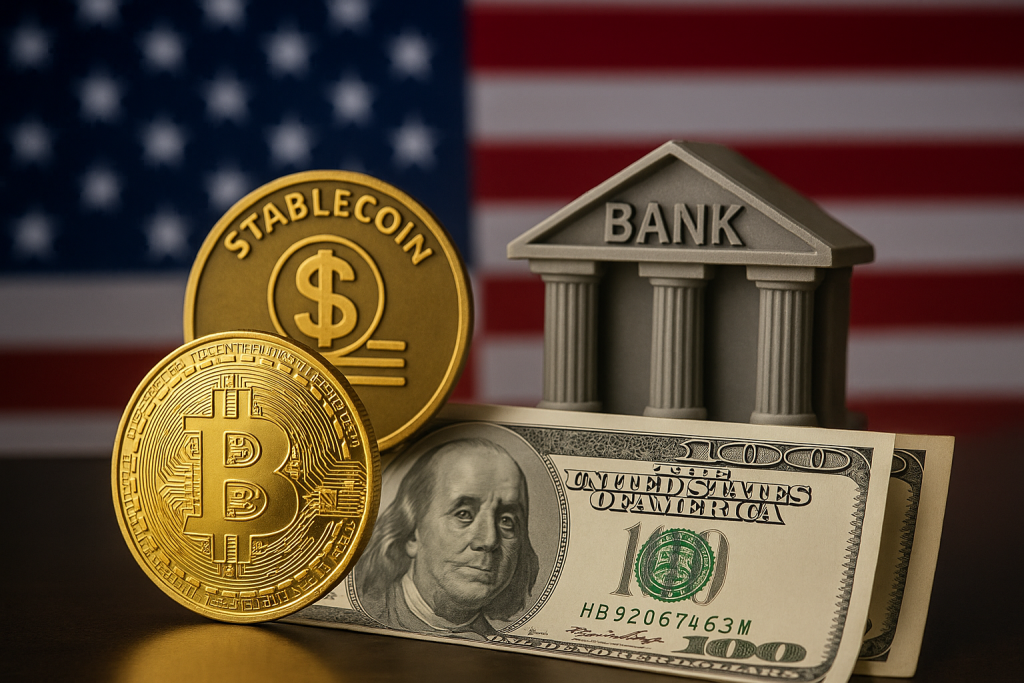
Stablecoins are digital assets pegged to fiat currencies, such as the U.S. dollar, which reduces price volatility and builds user confidence. Within the American financial system, this stability has made them increasingly attractive to traditional financial institutions exploring blockchain as a path to modernization. In 2025, stablecoins are no longer viewed as fringe technologies but as legitimate instruments of financial utility.
These digital currencies offer advantages like real-time settlements, transparent recordkeeping, and improved liquidity. In particular, cross-border payments can be completed in seconds with lower fees compared to legacy systems. For underbanked populations, they provide easier access to digital finance. As a result, stablecoins in the American financial system are becoming vital components of next-generation banking and financial infrastructure.
Use cases gaining momentum
One of the most promising applications of stablecoins lies in large-scale banking operations. Financial institutions are exploring how blockchain can improve back-end transaction processes by reducing reliance on intermediaries, cutting operational costs, and enhancing auditability. These benefits contribute to greater trust and resilience in the broader monetary system.
Retail adoption is growing steadily as well. Consumers use stablecoins for online purchases, peer-to-peer transfers, and even saving in digital wallets. The convenience and speed they offer appeal to users frustrated with the limitations of traditional banking. These emerging use cases prove that stablecoins in the American financial system are becoming practical tools for everyday financial activity.
Regulatory challenges and market stability
Despite their benefits, stablecoins raise important regulatory and economic questions. In 2025, U.S. regulators are debating how best to ensure reserve transparency, consumer protection, and systemic security. Without a clear framework, these assets could introduce instability, especially if confidence in a major stablecoin falters.
The risk of a “run” scenario, where users rapidly redeem tokens out of fear, is a primary concern. That’s why robust regulatory oversight is essential to integrate stablecoins in the American financial system responsibly. The focus is on building safeguards that ensure both innovation and market integrity coexist in harmony.
Balancing innovation with security
Striking the right regulatory balance is no simple task. Authorities are working to establish guidelines that define what constitutes a stablecoin, who can issue one, and how reserves should be managed. This clarity will shape how the ecosystem grows and how stablecoins interact with traditional banking systems.
By ensuring legal clarity and technical reliability, the U.S. can unlock the full potential of stablecoins in the American financial system. With well-structured policies, these assets can help strengthen financial innovation while protecting consumers and institutions from volatility or abuse.
Why stablecoins in the American financial system matter in 2025?
In a rapidly digitalizing economy, stablecoins represent a bridge between traditional finance and the decentralized future. Their ability to facilitate faster payments, lower costs, and increase access to financial services places them at the heart of economic transformation in the U.S.
Understanding the role of stablecoins in the American financial system is essential in 2025. With appropriate regulation and continued innovation, these digital currencies could offer long-term solutions for financial inclusion, operational efficiency, and modern monetary policy.